
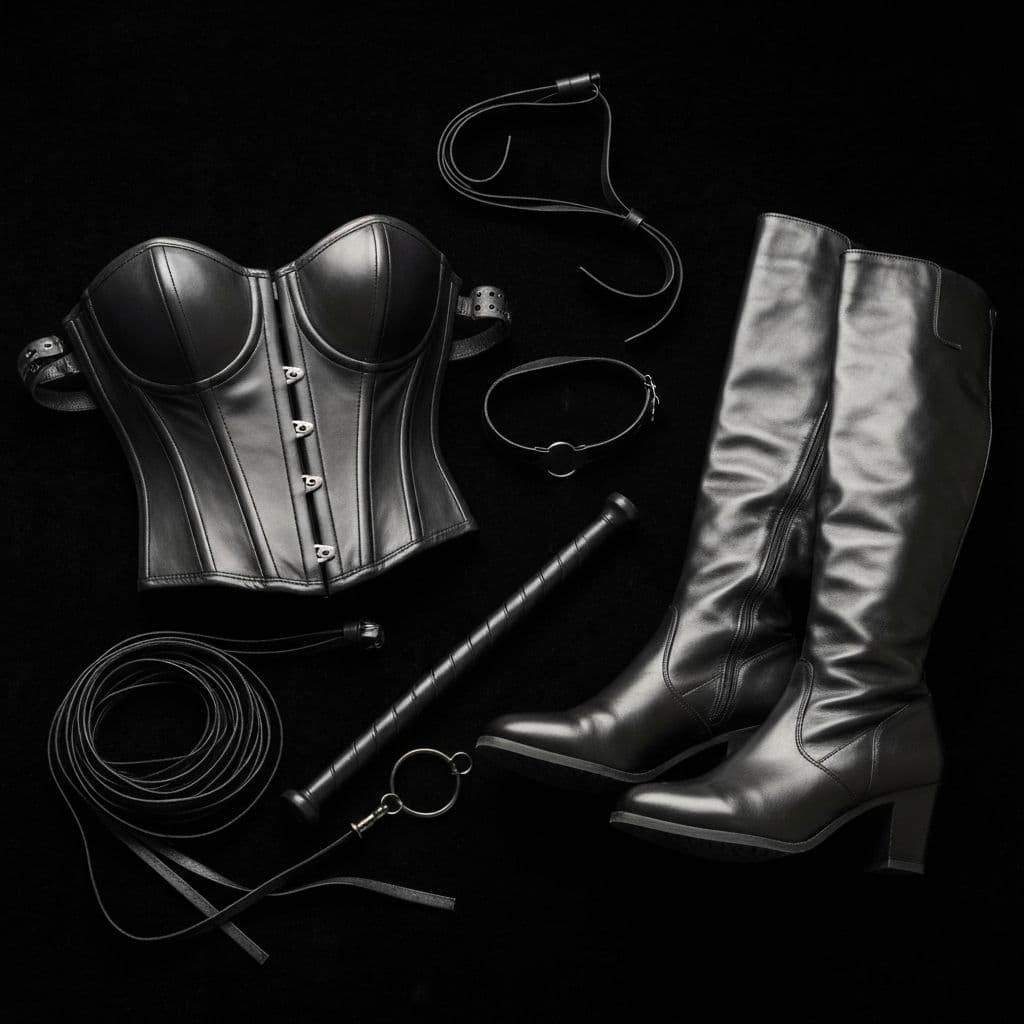
Why Equipment Choice Actually Matters
There's a persistent myth in bondage communities that gear doesn't matter - that any rope or any restraint will do. This is wrong, and it's the kind of thinking that causes injuries. The wrong material can cut off circulation in minutes. The wrong cuff design can cause nerve damage. The wrong hook can fail under load.
But here's the flip side: you don't need expensive gear to start. The beginner bondage market is full of overpriced "luxury" products that offer nothing over a well-chosen £15 pair of cuffs. This guide cuts through the noise.
We've organized this by experience level and budget. Start where you are. Upgrade when it makes sense.
---
Level 1: Complete Beginners (First Purchase)
Soft Fabric Cuffs - Your First Restraint
Before buying anything else, buy a pair of soft fabric or velcro cuffs. Not leather. Not rope. Fabric.
Why? Because beginners consistently misjudge how long a scene will last, how tightly something is applied, and how their body responds to restriction. Fabric cuffs are forgiving. They don't dig in. They release instantly. They're the safest way to find out whether physical restraint is something you actually enjoy.
What to look for:
- Double-stitched nylon or cotton interior lining
- Quick-release buckle (not just velcro alone)
- D-ring attachment point that doesn't rotate to a sharp edge
- Adjustable sizing - one-size rarely fits all
What to avoid at this stage:
- Novelty "bedroom bondage" kits from mainstream retailers - the hardware is typically cheap zinc alloy that can fail
- Anything that clips directly to itself without a connecting link
- Furry cuffs - they look soft but the fur can catch and pull
Spend between £15-£35. Anything cheaper uses hardware that fails. Anything more expensive at this stage is unnecessary.
If you want to see how cuffs work in practice before purchasing, bondage cams frequently feature performers demonstrating application techniques and discussing their equipment preferences.
A Blindfold
The second most impactful beginner purchase isn't a restraint at all - it's a blindfold. Removing sight amplifies every other sensation dramatically and creates immediate psychological intensity without any physical restriction risk.
A good blindfold has contoured eye cups that block light completely without pressing on the eyeballs. Sleep masks from travel retailers work reasonably well. Dedicated bondage blindfolds typically have wider elastic and better light-blocking.
Cost: £8-£20.
---
Level 2: Ready to Explore (Some Experience)
Leather Wrist and Ankle Cuffs
Once you've established that you enjoy physical restraint, leather cuffs are the sensible upgrade. Quality leather cuffs distribute pressure more evenly than fabric, last for years, and have locking hardware that's significantly more reliable.
Construction details that matter:
- Thickness: 4-6mm leather for wrist cuffs. Thinner than this won't hold shape. Thicker becomes unnecessarily rigid.
- Lining: Suede or fleece-lined interior prevents the leather edge from digging in during movement
- D-ring placement: Should be positioned so the ring faces outward when the cuff is worn, not toward the pulse point
- Hardware: Solid brass or stainless steel. Avoid chrome-plated zinc - it fails under sustained tension and can corrode
The locking question: Locking cuffs add psychological intensity but require discipline about key management. A missing key during a scene is a genuine problem. If you buy locking cuffs, buy two sets of keys and keep one somewhere accessible before the scene starts.
Budget: £40-£90 for a quality pair. Sets including ankle cuffs typically run £70-£150.
Bondage Rope - The Fundamentals
Rope is the most versatile bondage tool that exists and also the one with the steepest learning curve. Before buying rope, understand that you're also committing to learning technique. Rope applied incorrectly causes nerve damage, circulation problems, and rope burn.
Cotton rope (beginner-appropriate):
Cotton is soft, grips itself reasonably well, and is widely available. It's not the best material, but it's forgiving and inexpensive. Use 6-8mm diameter for body ties on most adults. Thinner rope concentrates pressure; thicker rope is harder to work with.
Avoid hardware store cotton rope - it's too stiff and often chemically treated. Look for bondage-specific or theatrical cotton rope.
Jute rope (intermediate):
Jute is the traditional material for Japanese bondage (shibari) and what you'll see on almost every bondage cam featuring rope work. It grips itself well, has good texture, and becomes softer with conditioning and use. It requires more preparation (treating to remove splinters, conditioning) but rewards the effort.
Hemp rope:
Similar to jute but slightly softer from the start. Good middle-ground option for practitioners moving past cotton but not ready for raw jute.
Synthetic rope (what to avoid for body bondage):
Nylon and polypropylene rope looks appealing because it's cheap and comes in bright colors. For body bondage, avoid it. It doesn't grip itself well (requires more knots under load), creates more friction burn, and gives much less tactile warning when tension is building dangerously.
How much rope to buy:
For a basic chest harness and wrist tie: two 8-meter lengths. For more complex work: four to six 8-meter lengths minimum. Most experienced rope bondage practitioners have 10-20 lengths.
Cost: Quality jute or hemp rope runs £15-£30 per 8-meter length from specialist suppliers.
To understand rope technique before purchasing, watching experienced practitioners on fetish cams gives useful context - you'll see how rope is handled, tensioned, and released.
---
Level 3: Building a Proper Kit
A Spreader Bar
A spreader bar is a rigid bar - typically 45-70cm - with cuffs or attachment points at each end. It maintains a fixed distance between limbs, creating enforced exposure and preventing the restrained person from closing their legs or bringing their arms together.
Quality spreader bars are made from solid steel or aluminum with welded rather than bolted attachment points. Adjustable length bars are convenient but check that the locking mechanism doesn't slip under load.
Entry-level spreader bars: £30-£60. Quality metal bars with proper cuffs: £80-£150.
Under-Mattress Restraint Systems
Underrated piece of equipment. A well-designed under-mattress system routes restraint straps under the mattress with attachment points at the corners - creating a four-point restraint without any hardware attached to the bed frame.
These are genuinely useful for couples who want easy setup/teardown, people in rental properties, and those whose bed frames aren't suitable for direct attachment.
Quality matters here - cheaper versions use thin webbing that slides. Look for 25mm or wider nylon webbing with stitched rather than glued connections.
Cost: £30-£80.
A Bondage Bag or Case
Organizational hygiene matters more than it sounds. Rope stored loosely develops tangles that cause delays at inconvenient moments. Leather left unprotected dries and cracks. Keeping equipment in dedicated, clean storage extends lifespan and prevents awkward scenes caused by tangled rope or missing keys.
A purpose-built bondage bag or hard case isn't glamorous but it's practical. Look for something with separate compartments, ventilation (leather needs airflow), and lock capability if privacy is relevant.
---
What You Actually Don't Need
Elaborate Beginner Kits
Most "complete bondage starter kits" sold at mainstream retailers or adult toy shops combine low-quality versions of multiple items. You're better off buying one good pair of cuffs than five mediocre items.
Suspension Rigging Equipment (Until You're Ready)
Suspension bondage - where the restrained person's weight is partially or fully supported by the bondage - requires dedicated rigging hardware, specific attachment points rated for human loads, and substantial technical knowledge. This is genuinely advanced equipment that causes serious injuries when used without proper training.
Don't buy suspension rings, carabiners, or rigging hardware until you've had hands-on instruction from an experienced rigger.
Chain
Chain looks striking and has genuine appeal in BDSM dynamics. It's also heavy, loud, hard to adjust quickly, and the individual links can pinch. Most practitioners who start with chain move away from it once they've used quality leather or rope. It's not a practical primary restraint material.
---
Safety Equipment - Non-Negotiable
Whatever level you're at, two items belong in every bondage kit:
Safety shears (EMT scissors): Blunt-tipped scissors designed to cut through rope, clothing, or restraints quickly and safely. These cost £8-£15 and should be within arm's reach of any bondage scene. Regular scissors are slower, have pointed tips that risk injury during panicked cutting, and are less effective on thick rope.
A circulation check habit: The "two finger rule" - after applying any restraint, check that two fingers fit between the restraint and the skin. Check extremities every 10-15 minutes. If a limb is tingling, pale, or cold - release immediately.
---
Where to Buy
Specialist BDSM retailers are strongly preferable to mainstream adult toy shops for hardware and leather goods. They stock better quality items, staff understand the functional requirements, and return policies typically accommodate equipment that doesn't fit correctly.
In the UK: Fettered Pleasures, Stockroom, and Regulation London are well-regarded. In the US: Stockroom and KinkLab carry quality hardware. European practitioners are well-served by Demask (Netherlands) and several German specialist retailers.
Avoid marketplace platforms for hardware items - counterfeit and substandard bondage hardware exists and is difficult to identify from listing photos alone.
---
The Honest Summary
Start simple. One good pair of cuffs and a blindfold is enough to establish whether physical restraint appeals to you before spending more. If it does, add rope gradually and invest in learning technique alongside equipment. Build toward leather and metal hardware as your practice develops.
The practitioners you'll see demonstrating expert rope bondage on specialist cams didn't start with expensive equipment - they started with whatever they had and built knowledge over time. Equipment supports skill; it doesn't replace it.
Explore the BDSM kink dictionary for detailed guides on specific techniques, and if you're looking for platforms to watch skilled practitioners before investing in your own gear, our reviews of the best BDSM cam sites covers the major options in detail.
Found this helpful?
Share this article with others who might benefit.